
 By
By 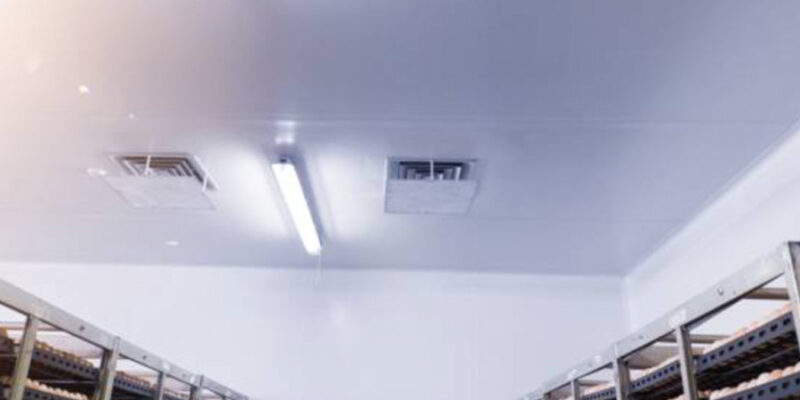
You’ve probably seen it yourself: a head of lettuce that stays crisp for three weeks, or an apple that tastes just-picked six months after harvest. That’s not magic—that’s cold storage engineering, and the quiet revolution behind it is happening in places you might not expect. When I first walked into a modern cold storage facility in China, I wasn’t prepared for how futuristic it felt. The air hummed with precision, sensors blinked along every corridor, and the temperature didn’t fluctuate by even half a degree. It was clear that the entire ecosystem had been painstakingly designed by a China cold storage solution provider that treats perishables with almost surgical care. This isn’t just about keeping things cold, it’s about creating a microclimate where food lives longer, travels farther, and wastes less. And at the heart of that microclimate lies what experts call Controlled Atmosphere Storage Solutions, which tweak oxygen, carbon dioxide, and humidity to slow down ripening naturally. Let’s take a journey through this world, because the story of food preservation is also the story of how we feed a growing planet.
The Backbone of Global Food Logistics
When you think about a cold storage facility, your mind might conjure up a giant freezer with stacked boxes. But a China cold storage solution provider thinks bigger. They design entire buildings that breathe—literally. I once toured a facility outside Shanghai where the insulation alone was a marvel: polyurethane panels sandwiched between steel, sealed so tightly that the interior felt like a vacuum. The corridor floors sloped just slightly toward drains, and every door had a rubber curtain that hissed when it closed. These details matter because a single degree of temperature shift can shorten a product’s shelf life by days. For a country that exports produce all over Asia, North America, and Europe, that’s a massive liability. That’s why the professionals behind these spaces treat each chamber like a science experiment. They monitor ethylene gas levels, adjust airflow patterns, and even program the lighting to mimic natural cycles. It’s not just storage—it’s stewardship. And when you add Controlled Atmosphere Storage Solutions into the mix, you’re basically giving fruits and vegetables a time machine. By reducing oxygen to around 1-3% and increasing carbon dioxide to 5-10%, you slow their metabolism dramatically. An apple that would normally spoil in two months can last a year without shriveling. A pear retains its crunch. This technology has turned China into a powerhouse for off-season exports, letting farmers in Shandong sell pears to European markets during winter.
Why Atmosphere Control Changes Everything
Here’s a little secret that most people don’t know: cold alone isn’t enough. If you just drop the temperature, produce still respires, still loses moisture, and still gets attacked by microbes. Controlled Atmosphere Storage Solutions solve this by altering the very air the food breathes. I remember speaking with a facility manager in Henan province who showed me the computer dashboard for his apple chamber. The system adjusted nitrogen injection in real time, based on readings from sensors embedded in the fruit bins. “We treat each batch like a patient,” he said, laughing. He wasn’t exaggerating. Different apple varieties need different atmospheres: Fuji apples prefer slightly higher oxygen, while Granny Smith apples thrive in ultra-low oxygen with higher CO2. A China cold storage solution provider doesn’t just build a box, they build a scalable system that can micro-manage these parameters across dozens of rooms simultaneously. The result is that food waste dropped by nearly 40% in his facility compared to traditional cold storage. That’s not just good for business—it’s good for the planet. When you consider that nearly a third of all food produced worldwide is wasted, these Controlled Atmosphere Storage Solutions become a climate solution in disguise. They let us stockpile harvests so we don’t have to fly in fresh produce from halfway around the world during off-season. Instead, we eat local, stored food.
Technology That Talks Back
Modern cold storage isn’t silent anymore. Walk through a facility built by a leading China cold storage solution provider, and you’ll hear beeps, clicks, and hums everywhere. Those sounds come from IoT devices—smart tags that track temperature, humidity, and gas composition every 30 seconds. If a door gets left open too long, an alert pings the supervisor’s phone. If a compressor starts to fail, the system reroutes cooling to prevent any hot spot. I once saw an engineer demonstrate this on a tablet: he opened a virtual map of the facility, and each cold room glowed green or red based on its health status. “We had a minor leak last month,” he told me. “The system detected it before the technicians could even smell it.” That kind of responsiveness is crucial when you’re storing millions of dollars worth of citrus or kiwis. And when these systems are paired with Controlled Atmosphere Storage Solutions, the precision gets even more impressive because you’re managing not just temperature, but chemical composition. The sensors can detect ethylene spikes—the ripening hormone—and trigger filters to scrub it from the air. That means your bananas stay green longer, your avocados soften on schedule, and your broccoli doesn’t turn yellow prematurely. For supermarket chains and export companies, this reliability is worth its weight in gold.
Building for Scalability and Sustainability
One thing that stands out about a China cold storage solution provider is how they think about the future. A typical project now includes renewable energy integration—solar panels on the roof, waste heat recovery for hot water, and even ammonia-based cooling systems that are more efficient than synthetic refrigerants. I visited a facility in Zhejiang that had a massive underground cold water storage tank, chilling water at night when electricity was cheaper and using it to cool the facility during peak hours. That lowered their energy bills by 25%. But the real innovation shows up in how they plan for expansion. The concrete floors are pre-stressed to support extra racks, the piping systems have spare connectors, the control software is modular. So when a client needs to add Controlled Atmosphere Storage Solutions to an existing cold storage room, it’s a clean retrofit. The same company that builds the shell can also install the gas-tight doors, the nitrogen generators, and the CO2 scrubbers. In the past, you needed separate contractors for each piece. Today, a China cold storage solution provider often serves as a single point of contact from design through commissioning. That streamlines the process enormously, especially for international clients who might not have local project managers.
The Human Side of Cold Storage
Behind all the high-tech gadgets and numbers, there are people who care deeply about food. I met a woman in Qingdao who manages a facility for frozen seafood. She told me that every time a shipment of mackerel arrives, she personally checks the glazing (the thin layer of ice that protects fish from freezer burn). “If the glaze is too thick, you’re paying for water,” she said with a wink. “If it’s too thin, the fish dries out.” That attention to detail is what distinguishes a great China cold storage solution provider from a mediocre one. They train their staff not just to push buttons, but to understand the biology of each product. When Controlled Atmosphere Storage Solutions are involved, the training becomes even more specialized. Workers learn how to interpret respiration rates, how to adjust nitrogen flow for different crop loads, and how to conduct pressure tests on chamber seals. There’s a pride in knowing that your work helps a farmer in Xinjiang sell grapes to Dubai, or a grower in Fujian ship lychees to Vancouver. It’s a quiet industry, but it’s full of passionate people who get genuinely excited about insulation thickness and oxygen sensors.
A Glimpse into Tomorrow
If I had to predict where this sector is headed, I’d say we’ll see cold storage become even more like a living organism. A China cold storage solution provider is already experimenting with AI-powered predictive models that forecast spoilage before it happens. Imagine a system that knows your peaches were picked during a rainy week, so it adjusts humidity higher and lowers temperature by half a degree to compensate. That kind of intelligence is being built into next-generation facilities. And Controlled Atmosphere Storage Solutions are evolving too—there’s research into using low-pressure storage (hypobaric) that could extend shelf life even further, though it’s still expensive for commercial use. For now, the combination of smart insulation, IoT monitoring, and precise gas control is already a game-changer. Every time you bite into a crisp apple in March, you’re tasting the result of careful engineering by a China cold storage solution provider that thought ahead. They might not be famous, but their work touches your table more than you realize. So the next time you see a perfectly ripe avocado in the dead of winter, give a nod to the unsung hero behind it: a cool room, a controlled atmosphere, and a whole lot of know-how.






Comments